
The 33rd China International Exhibition on Electric Power Equipment and Technology
Shanghai New International Expo Center (Hall N1 - N5, W4 - W5), PR China 2026 • 12 • 3 - 5
English
The 33rd China International Exhibition on Electric Power Equipment and Technology
Shanghai New International Expo Center (Hall N1 - N5, W4 - W5), PR China 2026 • 12 • 3 - 5
| Industry Snapshot: China's power sector is moving from capacity expansion to system competition |
|---|

|
| Publish Date : 2026-06-29 |
|
|
|
|
|
China's power sector is entering a more complex phase of competition. The central question is no longer just how much renewable capacity can be added, but how effectively the overall system can absorb volatility, support new demand, and preserve energy security under stress. Recent developments across financing, grid infrastructure, industrial policy, and digital power demand all point in the same direction: the next stage of value creation will be defined by system capability, not capacity headlines alone.
1) The bottleneck is shifting from generation to grid execution. As renewable penetration rises, the limiting factor is increasingly downstream. The issue is less about whether China can keep building wind and solar, and more about whether the grid can transmit, balance, and stabilize that power at scale. The Yunnan Power Grid case is especially telling: communications architecture, bandwidth, fault localization, and service isolation are now becoming core utility capabilities rather than back-office enablers. In practical terms, grid digitalization is moving from "efficiency upgrade" to "strategic infrastructure." 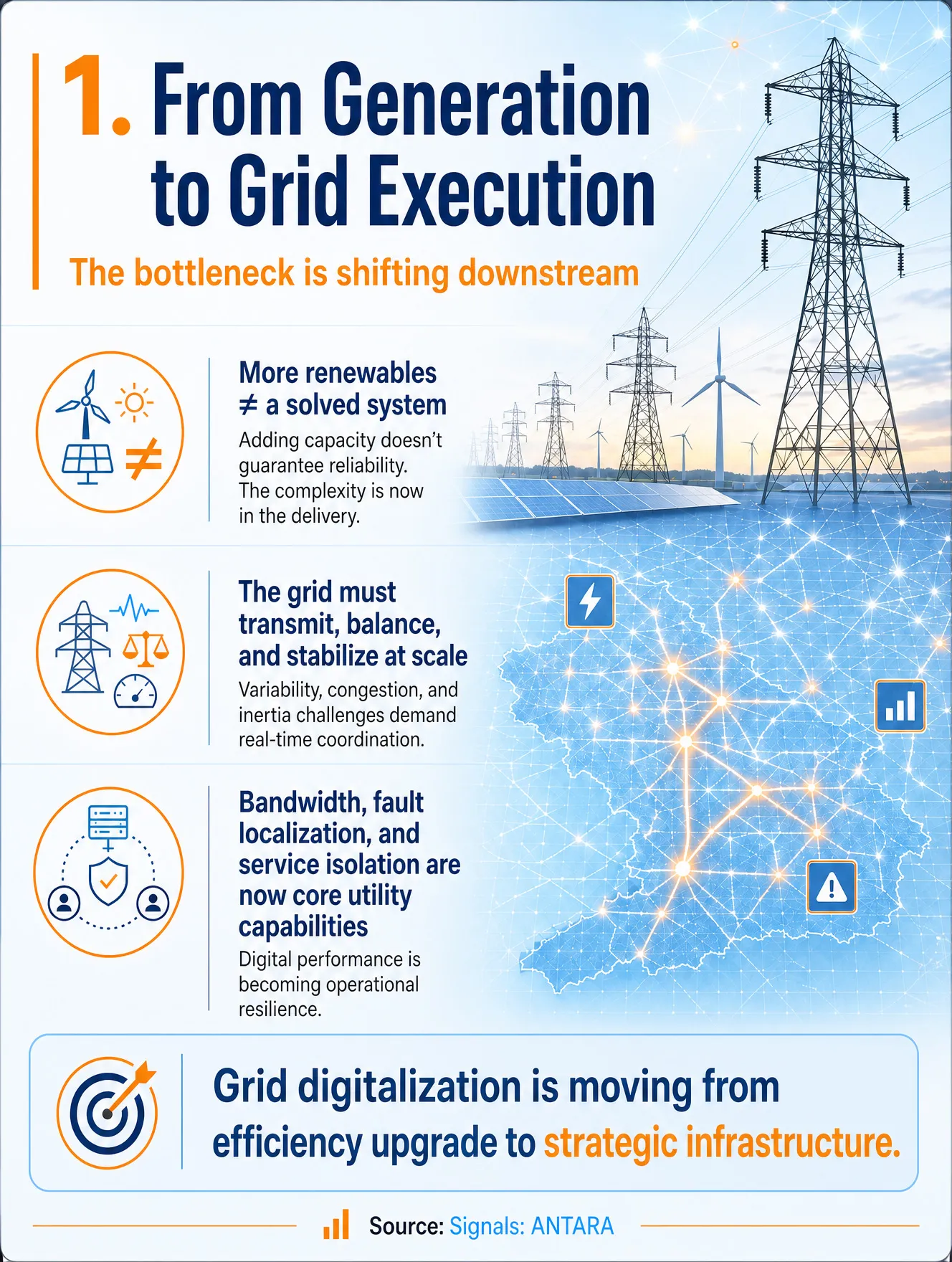 2) China's energy transition remains inseparable from energy security. A common analytical mistake is to read China's transition as a linear fossil-to-renewables substitution story. The reality is more pragmatic. China is scaling clean energy and electrification rapidly, while still relying on coal and other conventional sources as stabilizers when affordability and supply security come under pressure. Recent commentary on coal-to-chemicals and domestic substitution reinforces the point: in periods of geopolitical disruption, reliability and price resilience still outrank pure decarbonization logic. 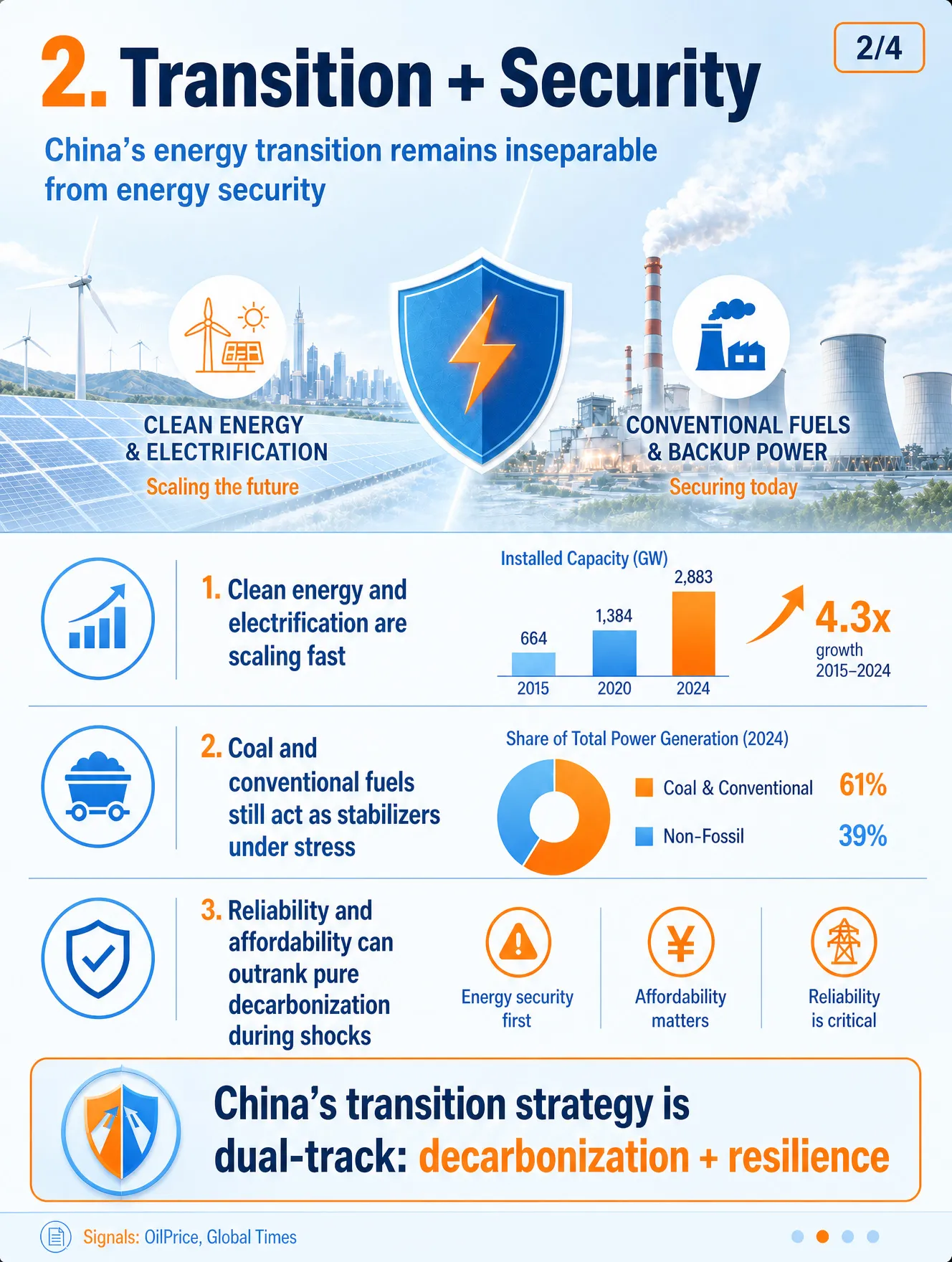 3) AI and data centers are becoming a structurally important demand driver. One of the clearest new signals is that computing infrastructure is now being treated as an energy-intensive strategic sector. China's move to supervise the energy use and emissions of AI and computing facilities suggests that digital infrastructure is no longer peripheral to the power story — it is becoming central to it. This matters because AI-related load is not just incremental; it is concentrated, quality-sensitive, and infrastructure-heavy, which raises the importance of renewable matching, direct power connections, and smarter energy management. 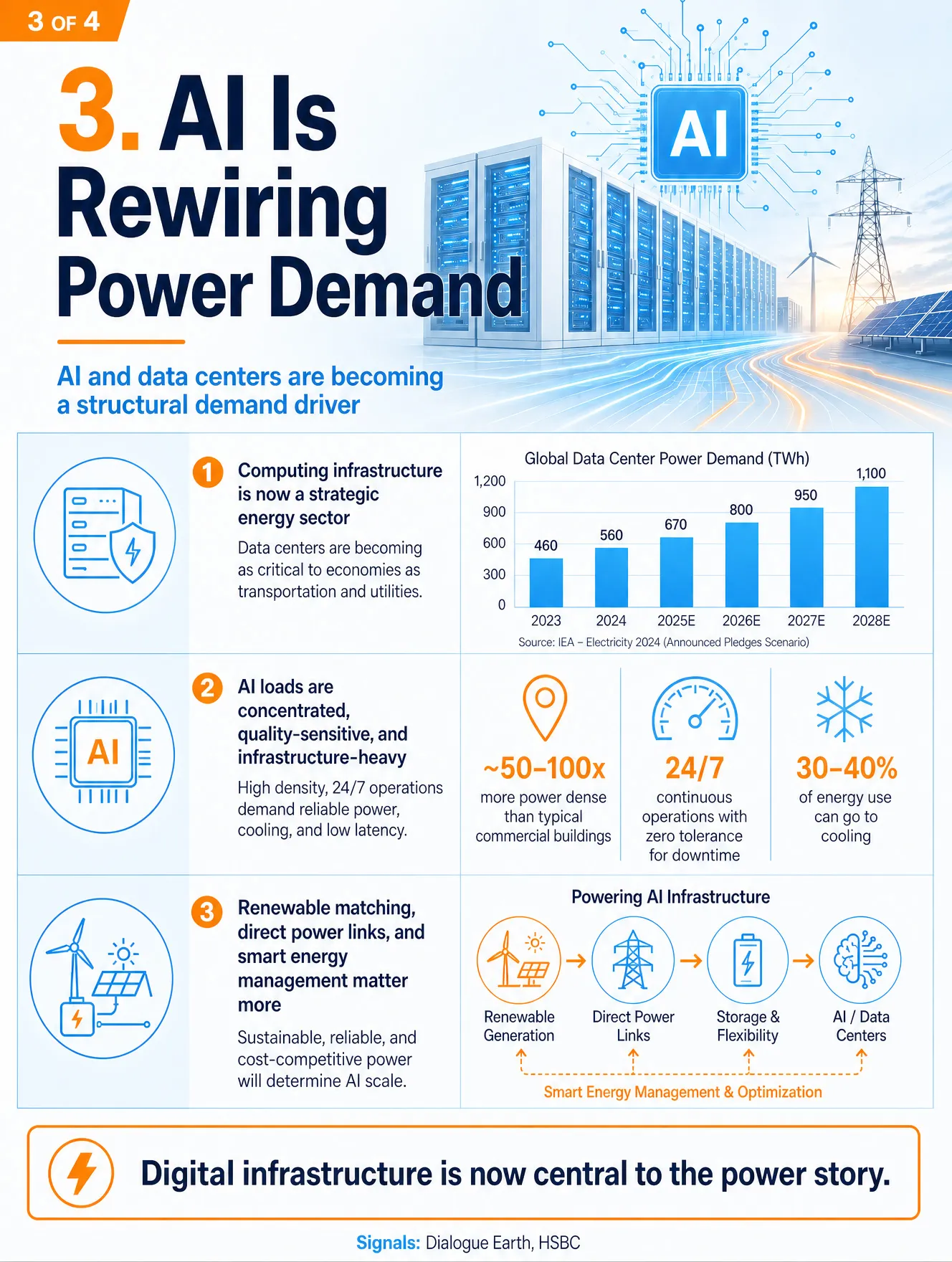 4) Scale alone will not define the winners; capital discipline and industrial order will. China retains enormous structural advantages in low-carbon manufacturing and export capability, and international finance is still backing that ecosystem. HSBC’s US$4 billion credit facility is a strong signal that global capital continues to see Chinese low-carbon firms as internationally scalable. But the supply side is not frictionless: illegal solar capacity and persistent overcapacity in segments such as solar glass show that scale can also become a source of disorder, margin pressure, and policy backlash. The implication is clear: future winners will not simply be the biggest players, but those best able to combine financing access, operational discipline, and policy alignment 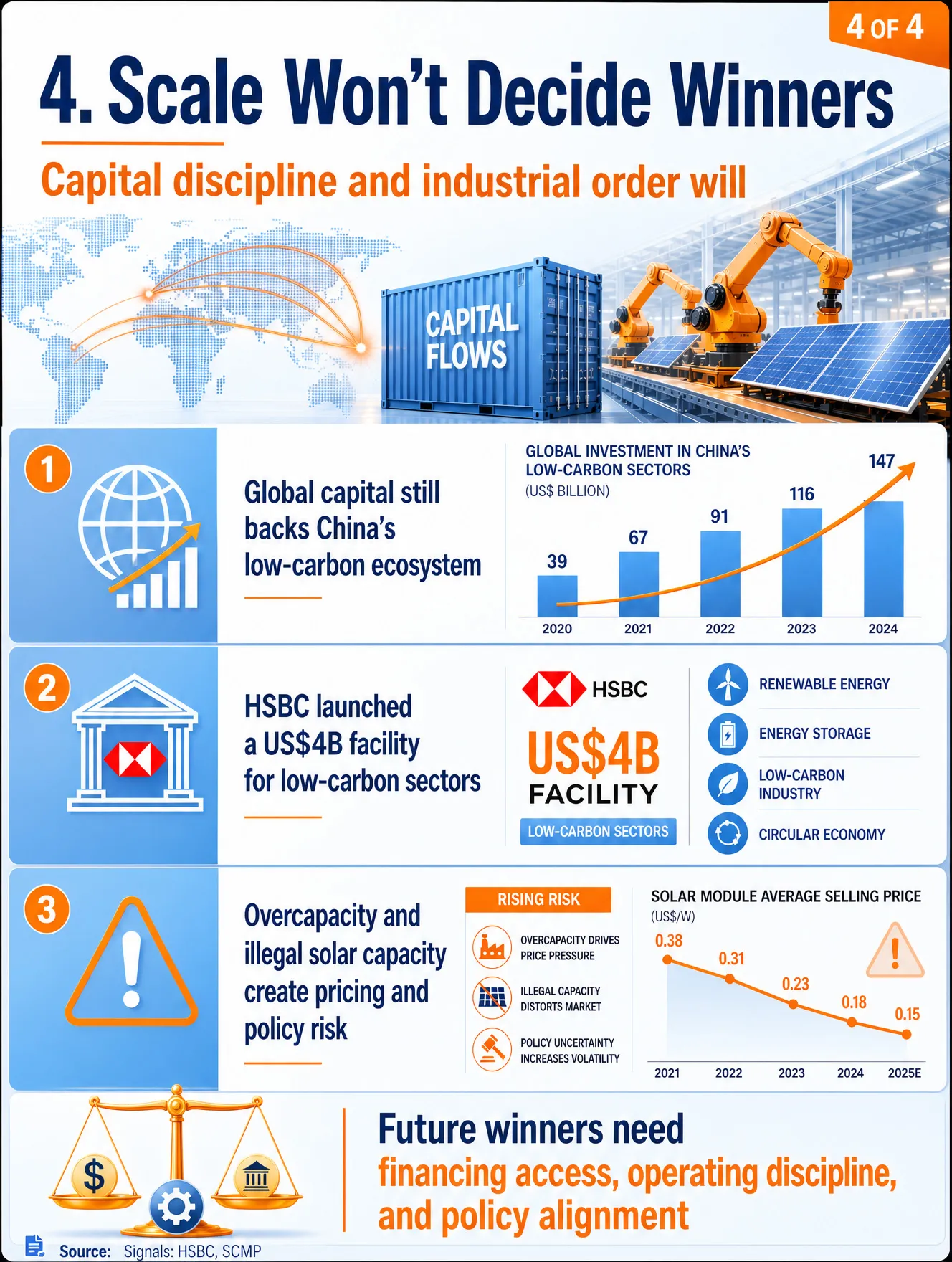 What this means strategically For investors, operators, and industrial players, the most useful lens is no longer installed capacity in isolation. A better question is: who controls the system bottlenecks? Grid integration, dispatch intelligence, digital backbone, financing reach, and resilience under geopolitical or climate stress are becoming more important than simple expansion metrics. China is still building more power — but more importantly, it is building a power system designed to support industrial competitiveness, digital growth, and energy security simultaneously. The next chapter in China's power sector will be shaped less by how fast megawatts are added, and more by how well the system performs under complexity. That is where the real competitive edge is moving. Join the Conversation at EP Shanghai 2026 Event: EP Shanghai 2026 Date: 3- 5 DEC 2026 Venue: Shanghai New International Expo Centre (SNIEC) Address: 2345 Longyang Road, Pudong New Area, Shanghai, China Pre-register today for the industry's annual flagship event. Visitor Pre-Registration : https://www.epchinashow.com/EP/visitor-preregistration/register/eng Let’s explore how grid intelligence, digital backbone infrastructure, AI-driven demand, and energy security strategy are redefining competitive advantage in China's power sector. See you in Shanghai. |

 Firefox
 Chrome
 Safari
 QQ
QQ Edge
Edge